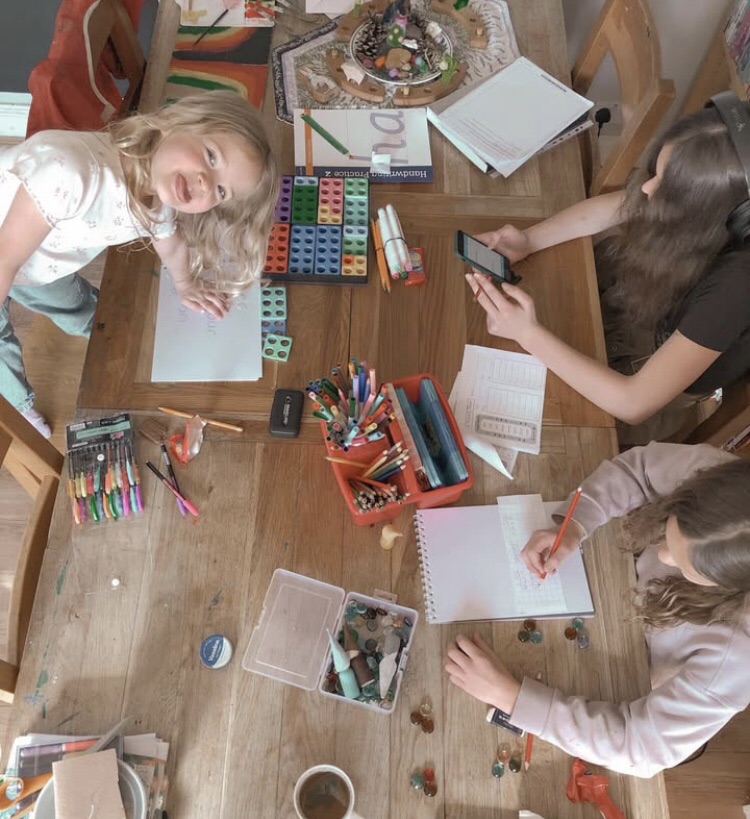
When I look back over my time as a home educator there are several pieces of advice I wish I’d had faith in, at the very beginning. I can remember the butterflies in my stomach and apprehension that I felt listening to seasoned home educators imploring me to believe that my children would want to learn, and everything would be ok.
Of all the great advice I received, there was some that stood out from the rest and its the same advice I pass on today when people ask me what things they need to know before beginning their home educating journey. Those early days can be overwhelming and feel scary at times. I became so passionate about home education that I wrote a book to help dispell all those doubts and you can find it here, but for now lets jump right in to my top 10 Things You Need To Know BEFORE You Begin Home Educating in the UK.
1. YOU ARE QUALIFIED TO TEACH YOUR OWN CHILD
You have managed to concieve, grow and birth your very own human. Succeeding in raising them for the first four or five years of their life! You have made informed decisions on their health, nutrition and wellbeing. You have taught that child to not only talk but to walk, go to the toilet and dress themselves. You have introduced your child to every single experience of the world by either facilitating those moments yourself or finding another responsible adult to do so. Your child has learned what life is and what it feels like. All because of your example. What you dont know, you find out. You can do this!
2. YOU CAN CHANGE YOUR MIND
A common fear is that once you have deregistered your child, you cannot re enrol them. You can. You absolutely can change your mind if things are not working out according to plan. There is no guarentee that your child will secure a place in the same school they were in before, but you most certainly can change your mind. Some people home educate for travel or work commitments and the children go in and out frequently. Some are simply waiting for a place in their preferred school. Not everyone who home educates is doing so for religious or problematic reasons. For many state school was just never part of their plan.
3. DO NOT INVEST IN A CURRICULUM…YET!
Remember there is currently no funding for home education, so whilst the fancy Online School or complete Boxed Open & Go Curriculum may feel perfect for you, it could end up costing you a pretty penny! That being said home education DOES NOT need to be expensive. Sure, you can sign up for all the extra curricular enrichment projects, buy all the workbooks and schedule in a trip a week if you want to, but there are a great many home educators that are happier sharing books and documentaires together and then completing a project at home. Both ways are wonderful.
Generally, most Home Ed parents would agree that they regretted rushing their first curriculum decisions, finding what they ended up with was either uninsipring or unfinished. Taking time to explore all your options and discover a style that suits your family best is far better. Waiting a few months will not leave your child behind in any way. (See point 7)
4. YOU DO NOT NEED TO DO ALL THE THINGS!
Choosing to home educate does not mean that you need to be your childs only teacher. A mixture of books, TV, educational apps and outings will tick many boxes. Of course you can learn along with your child but there is absolutely nothing that says you cannot outsource playing the guitar or long division to an expert. You are a facilitator. Your job is to facilitate your childs learning. Recognising that you can’t stand or know nothing about cell division is A-OK! Help your child understand where to look for information. The ultimate goal is to show your child how to become an independent learner.
5. STUDY DOES NOT TAKE PLACE FROM 9 TIL 3
Typically a home educated child will be recieving intense, one to one lessons in a block. It is not always practical to spread bookwork out over the course of a day as home life will prevent it. Many home educators for example, will work diligently on their subjects for a few hours each morning and then continue their learning-through-living for the rest of the day. Indeed, Unschoolers will only hit the books if their child requests to do so, yet their life is so rich with endless oppertunity to follow their passions as their parents present ideas whenever possible.
It is realistic to expect that study is done in a few hours but hands on learning will continue, often well past bedtime!

6. LEARNING IS HAPPENING ALL THE TIME
It may not look like learning to you, but I can assure you it is! Children are programmed to learn! At school or at home. School can be the perfect place for it and your child. I have children in both settings, but a home education need not lack anything and can be tailored to the individual. You are investing in your child, not a class full.
7. DESCHOOL! DESCHOOL! DESCHOOL!
I once thought that this was just a faddy buzz word. How wrong was I? If your child has been in a state school, then deschooling is a must. For both the child and the parent. It takes time to let go of the conditioned belief that you only learn if you go to school. It takes time to get used to a slower pace, a quieter workspace and a lack of timetable. Some children embrace Home Ed from the off. They are so relieved or proactive and everything just clicks. For others there may be some bordom or lack of motivation. They may not know what is expected of them or what to do with their time. They may also worry that they are not learning fast enough, as they have been so used to assesments or tests.
Each child will deschool at their own speed. While you wait for this to happen dont worry about the workbooks…unless your child asks for them!
8. DON’T BE A SLAVE TO YOUR HOME ED’ APPROACH
There are many approaches to home education. You may feel that you dont fit into any one style or you may find you have an element of all! Classical, Charlotte Mason, Waldorf, Montessori, Unschool, School at Home, Delight Directed or Child Led, Unit Studies, Gameschooling, Online Homeschool or eclectic.
It is ok to have different styles for different children or different seasons! For my Ultimate List of Home Educating Styles, click here.
9. FIND A GROUP, IF ONLY FOR THE EARLY DAYS
One of the most reassuring things you can do when you first begin home educating and even before if possible is to join some Home Ed groups where you can talk to people who have either been there or are where you are now.
Social Media groups or forums can be accessed around the clock and there are people who are happy to answer all your questions give advice or friendly pointers. Joining some local groups online can help you find playgroups and meets that you can actually go along to. Here you can begin to make friends and relax knowing you are in good company.
10. INSIST ON TIME OFF!
You are not a machine nor a martyr! Give yourself some grace. Insist upon time out for you on a regular basis. It’s non negotiable. If you dont have a good support network then speak to your children and enlist their help in the evenings. Explain that in order for you to give them your best each day, they need to allow you space in the evenings and to be good about going to bed on time.
It is important to rest and avoid burnout. You can read my post Home Ed Burnout – Causes, Signs & Coping Strategies for exhausted Mums, here.
Purchase my book Against The Grain – The Journey & Journals of a Home Educator, here.
DISCLOSURE- As an Amazon Associate, I earn from qualifying purchases

© 2025 Juliette Proffitt ALL RIGHTS RESERVED
THE ABOVE POST WAS WRITTEN BY AND REMAINS THE PROPERTY OF THE AUTHOR. ALL RIGHTS RESERVED. THE AUTHOR GRANTS PERMISSION TO SHARE UNALTERED POSTS ONLY WHEN EXPLICITLY CREDITING THEM. NO OTHER REPRODUCTIONS ARE GRANTED WITHOUT PRIOR PERMISSION.
 Beautiful Messy Life